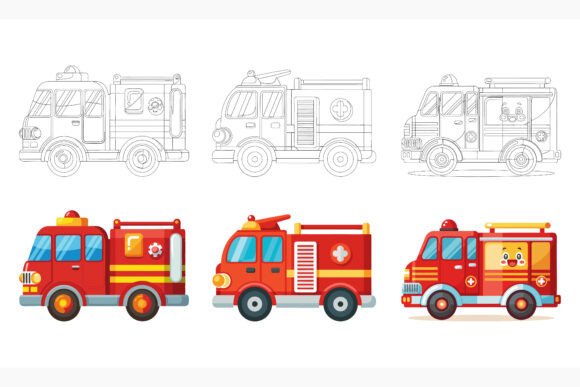
The Visual Utility of Firetruck Vector Illustration Collections
In the world of digital design, thematic illustration sets serve as critical tools for visual communication. Collections centered on specific subjects, like firetrucks, offer more than just decorative assets; they provide a cohesive visual language for projects requiring clarity, authority, and immediate recognition. A well-crafted firetruck illustration set is not merely a picture of a vehicle. It functions as a versatile symbol representing emergency services, safety, speed, reliability, and community protection.
What distinguishes a high-quality collection from a generic bundle of images often lies in its foundational design philosophy. A specialized set is built with intent, ensuring each component is purposeful and adaptable. This approach transforms simple illustrations into a reliable design resource.
Evaluating the Core Components of a Professional Illustration Set
When assessing any vector collection, professionals look beyond the aesthetic appeal to the structural and functional attributes that dictate real-world usability. Several factors determine whether a set will integrate smoothly into a workflow or become a source of frustration.
File Format and Software Compatibility
A primary consideration is the technical format. Collections offering files in AI and EPS formats cater directly to users of industry-standard vector software, primarily Adobe Illustrator. These formats preserve editable paths, anchors, and strokes, granting full creative control. The inclusion of JPG files provides quick-use, rasterized versions for contexts where immediate placement is needed, though with limited scalability. The explicit mention of design for both Mac and Windows users addresses a practical, often overlooked, compatibility concern, ensuring the files behave correctly across different operating systems.
Organizational Structure and Editability
The internal architecture of the files is a significant differentiator. A "neatly organized file and layer structure" is not a minor feature; it is a major efficiency gain. In complex projects, designers spend considerable time hunting for specific elements or cleaning up poorly grouped layers. A logically organized set respects the user’s time and allows for rapid isolation, modification, and export of specific parts of an illustration, such as isolating the ladder, wheels, or emblem on a firetruck design.
The promise of easy editing, color change, and modification speaks to a core need for customization. A firetruck illustration might need to align with a brand’s specific color palette or be adapted to represent a specific department’s livery. Sets that lock elements into fixed colors or compound paths reduce their utility.
Understanding the Tradeoffs: Specialized Sets vs. Generic Resources
Designers constantly balance using highly specialized assets against more generic, multi-purpose resources. A thematic set like one focused on firetrucks presents clear advantages and certain limitations.
Its main strength is consistency and detail. When a project requires multiple instances of the same theme—for example, creating a series of public safety infographics, an app for emergency response training, or promotional materials for a fire department—using elements from a unified collection ensures visual harmony. Every icon, symbol, and detailed illustration will share the same style, line weight, and level of detail, producing a professional, coherent result.
The potential tradeoff is scope. A firetruck-centric collection is inherently niche. If a designer’s needs shift to broader topics like transportation in general or industrial machinery, this specialized set may become less relevant. This is why evaluating the project’s primary needs is crucial. For ongoing work in community safety, healthcare emergency protocols, or insurance risk visualization, such a specialized set can be a foundational asset. For a generalist designer working on wildly varying projects daily, a more diversified bundle might offer better value.
Use Cases and Application Fit
The listed suitability for print, web, symbols, apps, and infographics highlights the vector format’s scalability. A single firetruck illustration can be rendered as a small app icon or enlarged to poster size without loss of quality. This makes such collections particularly valuable for agencies and individuals who produce multi-channel materials.
- Print Design: For brochures, posters, or safety manuals where high-resolution output is mandatory.
- Web & Digital: For website graphics, banners, or online training modules requiring crisp visuals at various screen resolutions.
- App Development: As intuitive iconography within applications related to safety, logistics, or municipal services.
- Infographics: To create clear, engaging data visualizations about response times, equipment statistics, or safety procedures.
A key decision factor is the perfection in details and consistency mentioned. In professional design, inconsistent detailing across elements can undermine a project’s credibility. A collection that prioritizes this ensures that every hose, light, and door handle is rendered with the same thoughtful precision, making the final compositions look authoritative and polished.
When a Specialized Collection Like This Is the Right Choice
Choosing a niche illustration set is a strategic decision. It aligns best with specific scenarios.
First, when theme consistency is a high priority. If you are developing a branded campaign or a series of related materials, pulling assets from varied sources can create a disjointed look. A dedicated firetruck collection provides a single source of stylistically matched components.
Second, when time efficiency in customization is essential. The easy editability described means adapting the assets to specific needs—like changing colors to match a client’s logo or combining elements to create a unique scene—can be done quickly within your preferred vector software, rather than starting from scratch or struggling with poorly constructed files.
Third, for projects where symbolic accuracy matters. A generic "vehicle" icon might not convey the specific meaning and urgency associated with a firetruck. Using a detailed, recognizable illustration communicates the correct message instantly to the audience.
Situations Where Alternative Options Might Be Necessary
Despite their utility, specialized collections are not a universal solution. You might require another approach if your project scope is undefined or exceptionally broad. If you are working on a project that only tangentially touches on emergency services, a single icon from a more general "transportation" or "public service" pack might suffice.
Furthermore, if your workflow rarely involves vector software like Adobe Illustrator, the benefits of AI and EPS formats are diminished. You might find better value in a set delivered primarily in SVG or PNG formats if your work is centered on web development or simple presentations.
Budget and frequency of use are also practical considerations. Investing in a highly specialized set is rational if you foresee repeated use across multiple projects. For a one-off need, exploring stock illustration websites with single-image licenses or utilizing simpler icon fonts might be a more cost-effective path.
Making an Informed Decision on Design Resources
The choice ultimately hinges on aligning the asset’s capabilities with your project requirements, workflow, and long-term needs. A well-made firetruck illustration set offers distinct value through its thematic focus, technical construction, and ease of adaptation. It solves the problem of creating consistent, detailed, and scalable visuals for a specific domain.
Before committing to any specialized resource, it is prudent to review the exact specifications—the number of variations, the true editability of the files, and the examples of the layer organization. This due diligence ensures the collection will integrate into your process as a helpful tool, not just as another downloaded file. In design, the right resource does not just add an image; it enhances efficiency, maintains quality, and supports clear communication.